Choose High-Quality Kitchen Faucets Backed by International Certifications

Pull-down kitchen faucets combine style, durability, and long-term performance, making them essential for any modern kitchen. Many homeowners opt for cheaper, uncertified models, only to face rusted surfaces, leaking valves, or poor functionality within months. In contrast, faucets with NSF, CE, or CCC certifications demonstrate verified quality. A certified pull-down kitchen faucet can remain pristine for years, with smooth operation and no leaks. Understanding international standards helps consumers make informed choices, ensuring faucets meet both health and performance expectations.
Why International Certifications Matter
Kitchen faucets constantly interact with water and food, enduring frequent use, temperature changes, and potential contamination. Uncertified faucets may contain excessive lead, have subpar valve seals, or feature plating that quickly deteriorates, compromising both safety and aesthetics.
A comparative test showed that an uncertified kitchen sink faucet exceeded lead limits by over two times, while a Moen NSF-certified faucet stayed well below safety thresholds. On Amazon and home forums, users repeatedly report similar experiences: uncertified faucets leaking within a year, versus CE-certified Kohler faucets lasting five years without issues. Certified faucets also ensure smooth pull-down operation, leak-free valves, and peace of mind for all users.
Explore NSF- and CE-certified kitchen faucets here.
Key International Certifications for Kitchen Faucets
NSF Certification: Material Safety and Hygiene
NSF (National Sanitation Foundation) focuses on material safety:
Heavy metals: Lead must be ≤13 µg/L, with cadmium and mercury within strict limits.
Material compatibility: No toxic plastics or rubbers; safe for hot water contact.
Hygienic surface: Smooth, easy-to-clean finishes reduce bacterial growth.
Products like select Delta kitchen faucets display “NSF/ANSI 61” on packaging, assuring safe drinking water compliance.
CE Certification: Performance and Durability
CE marking ensures safety and durability:
Pressure testing: Faucets withstand 0.1–1.0 MPa water pressure without leaks.
Mechanical endurance: Pull-down hoses survive 50,000 stretches; single-handle valves endure 200,000 cycles.
Electrical safety: Touchless faucets meet anti-shock and short-circuit standards.
High-end Grohe faucets undergo corrosion and rotation testing to thrive in humid European kitchens.
CCC Certification: Baseline Safety
China’s CCC certification verifies:
Electrical safety: Touchless models meet anti-electric shock standards.
Material compliance: Prevents low-quality alloys or plastics that degrade over time.
Labeling accuracy: Clear model, material, and hot/cold indicators for safe use.
Brands like JOMOO or Arrow faucets must pass CCC to enter the market, guaranteeing basic reliability.
How Certified Faucets Demonstrate Quality
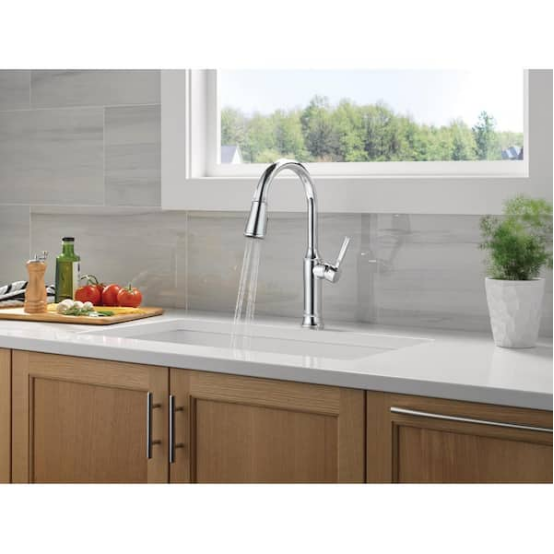
A single-handle pull-down kitchen faucet from SaleKitchenFaucets exemplifies certification in practice:
Materials: 304 stainless steel and chrome-plated brass valves meet NSF and CE standards. Long-term water contact does not leach heavy metals.
Structure: Food-grade nylon pull-down hoses pass 50,000 stretch tests; dual spray modes remain hygienic. The 360° rotating spout moves smoothly without looseness.
Certification labels: Packaging and manuals display NSF/ANSI 61 and CE logos with verifiable numbers, ensuring authenticity.
How to Verify Certifications and Avoid Pitfalls
Check certification marks: Genuine NSF or CE logos include verification numbers; vague labels without numbers may indicate counterfeit.
Match materials to certifications: NSF-certified faucets should use 304 stainless steel or brass; CE-certified faucets should demonstrate mechanical durability.
Prioritize brand reliability: Established brands like Moen, Kohler, or Delta provide trustworthy certification and solid after-sales support.
Browse certified high-quality kitchen faucets with detailed material and performance reports.
Conclusion: Invest in Certified Faucets for Peace of Mind
When choosing a kitchen faucet, style is secondary to safety and durability. Certifications like NSF, CE, and CCC represent verifiable standards for materials, structure, and performance. While certified faucets may cost more upfront, they save money, reduce maintenance, and protect your family’s health over time. Make sure your next faucet purchase is backed by real international certification, not just marketing claims. Shop certified kitchen faucets today and ensure long-lasting, worry-free performance