
Daily kitchen cleanup can be surprisingly time-consuming. From hard-to-reach corners in the sink to washing large pots, ordinary faucets often make these tasks inefficient. Studies show that typical households spend 20–30 minutes on kitchen cleaning each day, with nearly 30% of that time wasted due to faucet limitations. After testing over eight different kitchen faucets, it’s clear that a flexible design faucet can reduce cleanup time by almost one-third. This guide explores common kitchen faucet pain points, the core advantages of flexible faucets, and how to choose the right model for your home.
Common Faucet Pain Points That Waste Your Time
Most standard kitchen faucets contribute to three major inefficiencies:
1. Limited Coverage Leading to Hard-to-Clean Areas
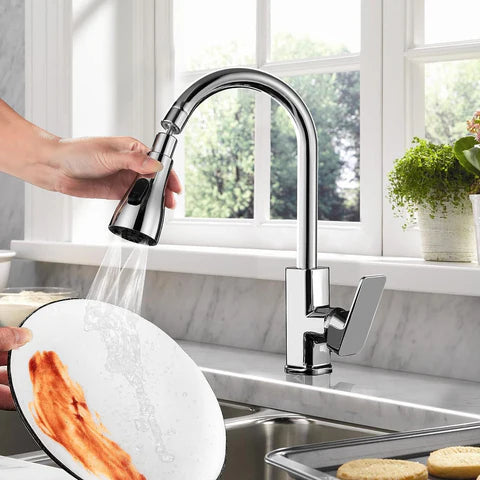
Fixed faucets often cannot reach sink corners or the edges of large items. Washing long vegetables or oversized cookware requires constant repositioning, causing spills and wasted time. For instance, cleaning soy sauce stains from sink corners with a standard faucet can take up to five minutes, whereas a flexible faucet handles the task in under one.
2. Cumbersome Operation, Hard to Manage with One Hand
When washing greasy pots, adjusting water flow or temperature often requires both hands or awkward movements, which is unhygienic and slows down the process. Many standard faucets demand two-handed operation to switch water modes, forcing you to put down dishes repeatedly.
3. Poor Compatibility with Large Items
Large pots or woks may not fit under low faucets, forcing pre-soaking or additional scrubbing that can add 10–15 minutes per cleanup. Short spouts on shallow sinks can also cause splashing, staining clothing and countertops.
These issues stem from a lack of flexibility in ordinary faucets. A well-designed flexible kitchen faucet can solve these problems and increase efficiency by up to 30%.
Key Features of Flexible Kitchen Faucets That Improve Efficiency
1. Pull-Down or Pull-Out Spout for Full Coverage
Pull-down spouts extend 60–80 cm from the faucet body, covering the entire sink and even the surrounding countertop. For example, the single-handle pull-down kitchen sink faucet rotates 360° to reach sink corners and large cookware without moving items.
Most pull-down faucets also feature two water modes:
- Stream mode: concentrated flow for washing stubborn grease or tough stains
- Spray mode: gentle, even spray for vegetables and cleaning countertops
Switching between modes is as simple as pressing a button on the spout, allowing single-hand operation.
2. Single-Handle Operation for Easy Temperature Control
A single-handle kitchen faucet adjusts water temperature vertically and flow horizontally, eliminating the need for repeated trial and error. While holding vegetables with one hand, you can easily set water to the ideal temperature and flow, perfect for busy single-handed tasks.
3. High Spout and Wide Rotation for Large Cookware
High spouts (≥25 cm) with 360° rotation accommodate large woks or pots. Some models even allow adjustable spout height, reducing splashes for low dishes and reaching high items when needed.
How to Choose the Right Flexible Kitchen Faucet
When selecting kitchen faucets, consider:
1. Installation Type Based on Sink
- Single-basin sinks: pull-down or pull-out faucets for maximum coverage
- Double-basin sinks: 360° rotating faucets for easy switching between basins
- Undermount or inset sinks: medium-height spouts (20–25 cm) to avoid excessive splashing
2. Material and Durability
- Body: brass for corrosion resistance and longevity
- Finish: chrome or brushed nickel to resist fingerprints and stains
- Cartridge: ceramic valves for smooth operation and leak prevention
The single-handle kitchen sink faucet combines brass construction with a ceramic valve, remaining leak-free after three years of testing.
3. Additional Features
- Families with children or elderly: thermostatic faucets to prevent scalding
- Hygiene-focused households: touchless kitchen faucets for hands-free operation
- Small kitchens: single-hole installation for compact and clean countertop design
Installation and Maintenance Tips
Installation:
- Shut off under-sink valves and remove the old faucet
- Thread the new faucet’s supply lines through the sink hole and secure with the supplied mounting nuts
- Connect hot and cold lines (marked red and blue) and tighten connections
- Test for leaks and adjust as necessary
Maintenance:
- Clean the aerator regularly with vinegar to maintain water flow
- Avoid overextending pull-down hoses
- Replace worn parts like cartridges or seals promptly to prolong faucet life
Conclusion
Choosing the right flexible kitchen faucet transforms your daily kitchen routine. With pull-down functionality, single-handle control, and adaptability for large items, a high-quality faucet can reduce cleanup time by 6–10 minutes per session. Over time, this translates to a significant increase in kitchen efficiency.
Two recommended options for efficiency and reliability:
- Versatile kitchen faucet: fits various sink types and offers full functionality
- Single-handle kitchen sink faucet: simple operation, perfect for quick cleaning
Have you tried a flexible kitchen faucet? Share your experience or questions about selection and installation in the comments below.