Caring for Parents in the Kitchen: Single-Handle Faucets for Safe and Easy Use

As parents age, small details in the kitchen can become inconvenient or even risky. Traditional double-handle kitchen faucets require adjusting both hot and cold taps, which makes it difficult to hold a pot with one hand. Stiff handles and unstable water flow can result in scalding or spills, causing potential accidents. These seemingly minor issues may gradually make parents reluctant to cook. Upgrading to a single-handle kitchen faucet can easily resolve these problems. Models such as this single-handle kitchen sink faucet are designed with elderly users in mind, considering every detail from turning on the water to temperature adjustment. When paired with a high-quality kitchen faucet, parents can cook more safely, with less effort, and enjoy preparing meals again.
Understanding the Challenges: Why Traditional Faucets Are Hard for the Elderly
Elderly users face three main hidden obstacles with traditional kitchen faucets, which not only reduce efficiency but also increase safety risks. Double-handle adjustment is difficult, making single-hand operation cumbersome. When holding a pot or stirring, parents must awkwardly twist two handles with one hand, slowing down water temperature control and potentially causing dishes to slip. Some older faucets require significant wrist strength to operate, leading to joint discomfort, especially for those with weakened wrists or osteoporosis. Water flow can also be unpredictable, resulting in scalding or splashing that wets clothes and increases the risk of catching a cold.
Single-handle kitchen faucets directly address these pain points with integrated adjustment, effortless operation, and stable water flow, creating a safer and more user-friendly kitchen experience for elderly users.
Elderly-Friendly Features: Three Core Advantages of Single-Handle Faucets
Single-handle faucets designed for elderly users offer more than just a simplified design; they are ergonomically optimized for physical ability and usage habits.
The first core advantage is integrated single-handle adjustment, allowing one-handed control of water temperature and flow. Simply push or pull the handle to adjust water volume and turn left or right to control hot and cold water. This eliminates the need to remember which handle is for hot or cold water. Parents can even use their elbow or spare hand to adjust the flow while holding a pot, avoiding frequent switching of hands.
For example, this single-handle kitchen sink faucet features a curved handle that fits comfortably in the palm, with low resistance, making it easy for users with reduced strength. One customer shared that after installing a single-handle faucet, her mother could adjust the water with one hand while washing vegetables, saving time and effort.
The second advantage is effortless operation combined with anti-scald design, reducing strain and enhancing safety. High-quality ceramic cartridges, like those emphasized in this high-quality kitchen faucet, allow handles to turn easily without forcing the wrist. Some models even feature lift-up operation, where a slight upward push activates water flow and downward press stops it, minimizing joint stress. Handles are made from heat-resistant materials, and valve bodies often include protective coatings, preventing accidental burns even with prolonged hot water use. High-end faucets may also offer water temperature memory, restoring the previous setting for convenience and safety.
The third advantage is stable flow with splash prevention, which keeps clothing dry and cleaning simpler. Multi-layer aerators mix water with air to produce gentle, non-splashing streams. Flow can be precisely adjusted for different tasks, such as washing vegetables with low flow or cleaning pots with higher pressure. Some faucets feature high-arc spouts that reach deep pots and sinks, reducing the need for bending and protecting the lower back.
Choosing and Installing: Two Key Considerations for Elderly-Friendly Use
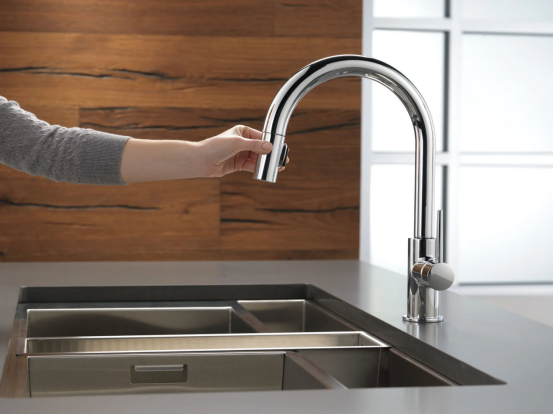
Selecting a single-handle faucet requires attention to ease of use, installation compatibility, and user details. First, check compatibility with sink installation holes, choosing faucets that fit single or dual-hole sinks. Consider spout height and reach to match common pots and basins, and select corrosion-resistant, easy-to-clean materials like stainless steel or chrome. High-quality faucets, such as this model, offer reliable after-sales support, including long-term warranties and installation service.
Second, during installation, make the hot and cold directions clear with high-contrast labels to reduce mistakes. Adjust handle resistance so elderly users can operate the faucet effortlessly, and set default water flow to medium to prevent excessive splashing.
Conclusion: Single-Handle Faucets Offer Practical Care and Comfort
A single-handle kitchen faucet may seem like a small change, but it resolves major difficulties for elderly users. No more struggling to adjust water temperature, exerting wrist force, or worrying about splashing. Upgrading the kitchen with a single-handle faucet and high-quality components allows parents to cook safely and comfortably every day. Caring for parents is not about expensive gifts but improving the small details of daily life, which is precisely the warmth and value a single-handle faucet brings.